
| Name | Former Position | Duration of Stay | Next or Current Affiliation | |
|---|---|---|---|---|
 | Gina PANTANO | Visiting PhD Candidate | ||
 | Ross KNAPMAN | PhD Candidate | 2019-2024 | University of Duisburg-Essen |
 | Bennet KARETTA | PhD Candidate | 2021-2025 | Independent Researcher |
 | Angélica Maria RUIZ PERDOMO | Media & Outreach | 2024-2025 | |
 | Nayra ALVAREZ | PhD Candidate | 2020-2025 | |
 | Ricardo ZARZUELA | Postdoctoral Researcher | 2019-2025 | Independent Researcher |
 | Venkata Krishna BHARADWAJ | Postdoctoral Researcher | 2017-2025 | Data Analyst, Property Expert |
 | Marius WEBER | PhD Student | 2024-2025 | Scientist at Zeiss |
 | Tobias WAGNER | Postdoctoral Researcher | 2021-2025 | Hessian Ministry of Finance |
 | Anna HELLENES | Researcher | 2019-2025 | Post-doctoral Researcher,Institute of Physics of the Czech Academy of Sciences |
 | Robert VETTEL | IT & Systems Administration | 2016-2025 | IT system electronics engineer, IQCB, JGU Mainz |
| Elizabeth MARTIN JEFREMOVAS | AvH Postdoctoral Fellow | 2023-2024 | Postdoctoral Fellow in Luxemburg | |
 | Steven SCHOENMAKER | PhD Candidate | 2020-2024 | |
 | Lukas KLEIN | Administrative Student Assistant | 2019-2023 | |
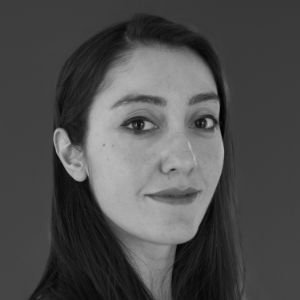 | Gizem ÖZKAN | PhD Candidate | 2020-2023 | |
 | Matthias GREBER | Scientific Student Assistant | 2021-2023 | |
 | Lennart PIOTRASCHKE | Scientific Student Assistant | 2021-2022 | |
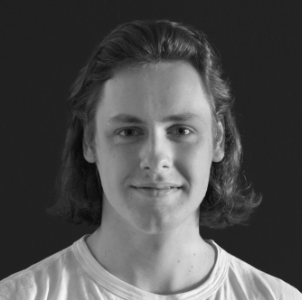 | Martin MÜNZENBERG | Scientific Student Assistant | 2021-2022 | |
 | Hakan DEMIREZEN | Administrative Student Assistant | 2021-2023 | |
 | Marie BÖTTCHER | Postdoctoral Researcher | 2016-2021 | |
 | Wojciech MORAWIEC | Master Student | 2017-2019 | Bundeskriminalamt Wiesbaden |
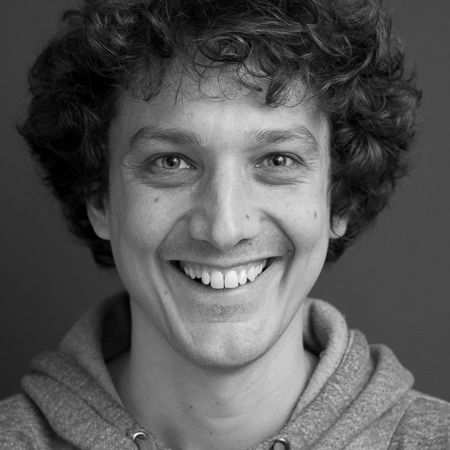 | Bertrand DUPÉ | Research Team Leader | 2016-2019 | Université de Liège |
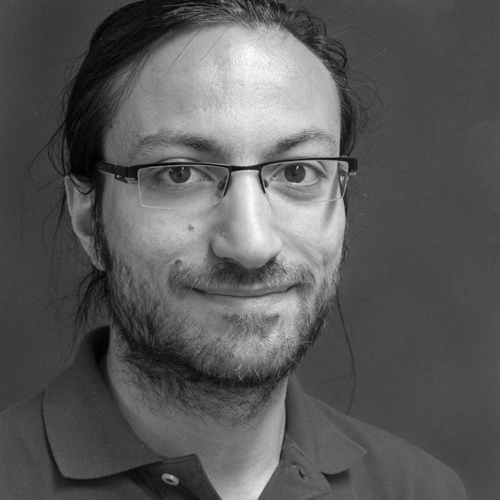 | Pedram BASSIRIAN | Research Assistant joint with TWIST Group | 2018-2019 | |
 | Davi R. RODRIGUES | Postdoctoral Researcher joint with TWIST Group | 2017-2019 | TWIST Group |
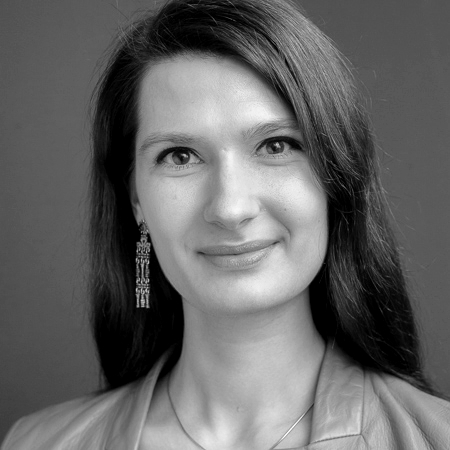 | Diana PRYCHYNENKO | PhD Candidate | 2015-2019 | |
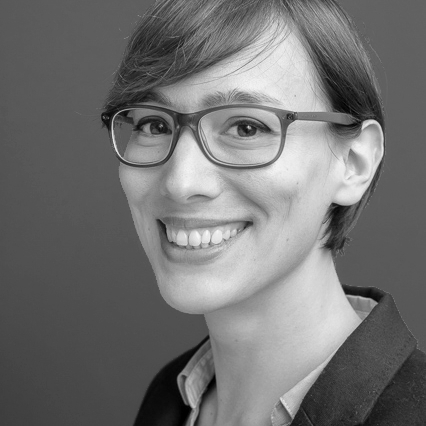 | Juliane SCHMIDT | Administration Media and Outreach | 2014-2019 | |
 | Marco ARMBRUSTER | Student Assistant | 2017-2018 | Self-Employed Illustrator |
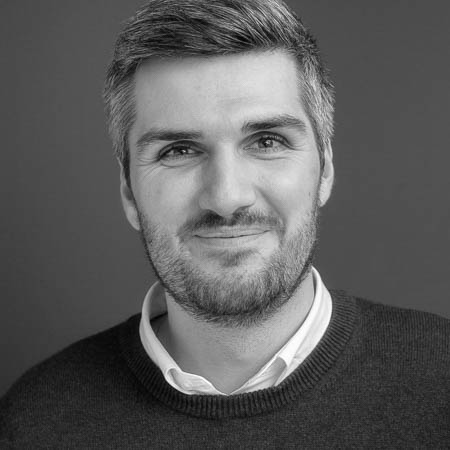 | Alexander BRAUN | Administration | 2015-2018 | Teacher for English and History |
 | Kyoung-Whan KIM | Postdoctoral Researcher | 2016-2018 | Center for Spintronics, Korea Institute of Science and Technology |
 | Melanie DUPÉ | Postdoctoral Researcher | 2016-2018 | Müllheizkraftwerk (MHKW) Frankfurt |
 | Samir Meslem | Student Assistant | 2017-2018 | |
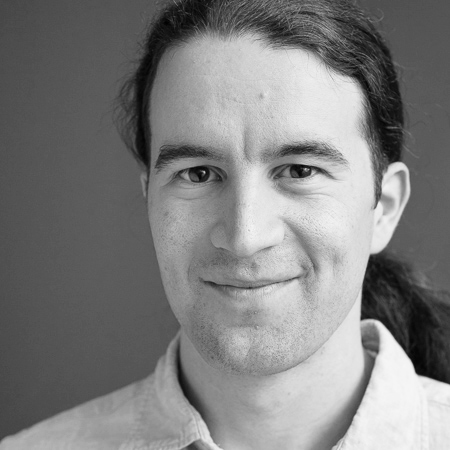 | Hristo VELKOV | PhD student | 2014-2017 | d-fine GmbH Frankfurt Germany |
 | Matthias SITTE | Postdoctoral Researcher | 2015-2017 | BASF Ludwigshafen Germany |
 | Joo-Von KIM | Visiting Scientist | 2017 | Centre for Nanoscience and Nanotechnology (C2N), CNRS, Univ. Paris-Sud, Université Paris-Saclay |
 | Kei YAMAMOTO | Postdoctoral Researcher | 2015-2017 | Postdoctoral Researcher Department of Physics & Astronomy University of Alabama Tuscaloosa, AL USA |
 | Ulrike RITZMANN | Postdoctoral Researcher | 2016-2017 | Postdoctoral Researcher Department of Physics and Astronomy Materials Theory Uppsala University Sweden |
 | Sabrina HOPP | Student Assistant | 2015-2017 | |
 | Valerie RUNG | Administration | 2014-2017 | |
 | Amaury de MELO SOUZA | Postdoctoral Researcher | 2015-2017 | Data Scientist - Research Engineering ArcelorMittal Metz France |
 | Yuta YAMANE | Postdoctoral Researcher | 2014-2017 | Postdoctoral Researcher RIKEN - Center for Emergent Matter Science Wako, Saitama Japan |
 | Karin EVERSCHOR-SITTE | Postdoctoral Researcher | 2015-2016 | Leader of Emmy-Noether Group TWIST Johannes Gutenberg-Universität Mainz |
 | Zhe YUAN | Junior Team Leader | 2016 | Center for Advanced Quantum Studies and Department of Physics Beijing Normal University Beijing China |
 | Jacob GAYLES | PhD student | 2014-2016 | Assistant Professor of Physics Department of Physics, ISA 6217 University of South Florida |
 | Shayan HEMMATIYAN | PhD student | 2011-2016 | Polsky Center for Entrepreneurship and Innovation University of Chicago USA |
 | Junichi IEDA | Guest Professor | 2015-2016 | |
 | Georg SCHWIETE | Interim Professor | 2014-2016 | Assistant Professor Department of Physics & Astronomy University of Alabama Tuscaloosa, AL USA |
 | Huawei GAO | PhD Student | 2015 | |
 | Jens HILZENSAUER | Student Assistant | 2014-2015 | |
 | Peng YAN | Postdoctoral Researcher | 2015 | |
 | Cristian CERNOV | Bachelor Student | 2014 | |
 | Simone JÄGER | Administration | 2014 | |
 | Yi LIU | Postdoctoral Researcher | 2014 | |
 | Vivek AMIN | PhD Student | 2012-2014 | Postdoctoral Researcher Electron Physics Group NIST Gaithersburg, MD USA |
 | Erin VEHSTEDT | PhD Student | 2010-2014 | Postgraduate Research Student London Centre for Nanotechnology University College London London UK |
 | Xin LIU | PhD Student | 2008-2013 | Professor School of Physics Huazhong University of Science and Technology China |
 | Xingyuan PAN | Postdoctoral Researcher | 2012-2013 | Research Assistant University of Utah Salt Lake City, UT USA |
 | Oleg TRETIAKOV | Postdoctoral Researcher | 2009-2012 | Assistant Professor Institute of Materials Research Tohoku University Sendai Japan |
 | Xiong-Jun LIU | PhD Student | 2007-2011 | Professor International Center for Quantum Materials Peking University Beijing P.R China |
 | Liviu ZARBO | Postdoctoral Researcher | 2007-2010 | Scientific Researcher National Institute for Research and Development of Isotopic and Molecular Technologies Cluj-Napoca Romania |
 | Mario F. BORUNDA | PhD Student | 2007-2009 | Assistant Professor Department of Physics Oklahoma State University Stillwater, OK USA |
 | Alexey A. KOVALEV | Postdoctoral Researcher | 2006-2008 | Assistant Professor Department of Physics and Astronomy University of Nebraska-Lincoln Lincoln, NE USA |
 | Nikolai A. SINITSYN | Postdoctoral Researcher | 2003-2004, 2006 | Postdoctoral Research Associate Center for Nonlinear Studies Los Alamos National Laboratory Los Alamos, NM USA |
 | Ewelina M. HANKIEWICZ | Postdoctoral Researcher | 2003-2004 | Professor (W2) Theoretical Condensed Matter Physics University of Würzburg, Germany |
Team
Former Team Members
Dr. Kyoung-Whan Kim
Research Interest
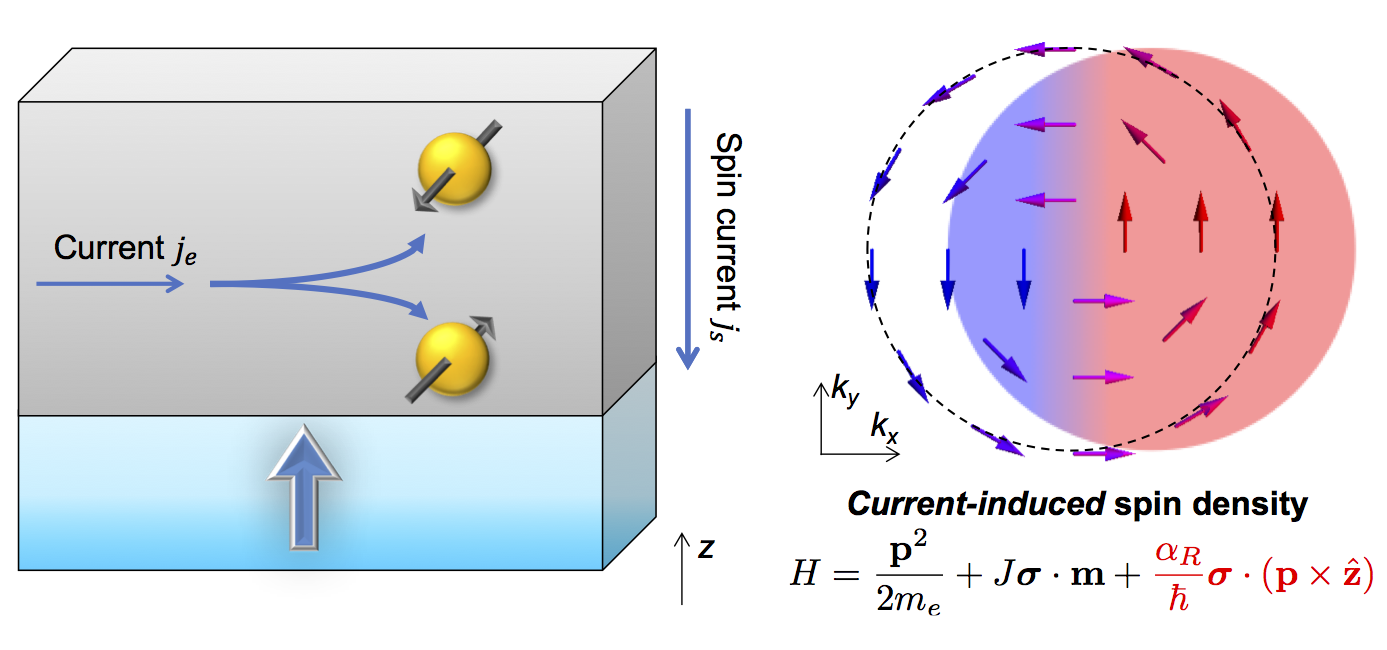
The purpose of my research is studying spin-orbit coupling effects in magnetic multilayers. The advantage of spin-orbit coupling is that direct coupling between the spin angular momentum and the orbital motion allows for angular momentum flow from the lattice to electron spins. This allows manipulating and detecting magnetic states by applying an electrical current with high efficiency. Spin-orbit torque, which is a torque on magnetization induced by spin-orbit coupling, is a good example. Furthermore, other spin-related phenomena, such as spin motive force, magnetic damping, and magnetoresistance, are also significantly affected by spin-orbit coupling.
In magnetic multilayers, inversion symmetry is naturally broken, allowing new physics which have been protected by symmetry. The effects of symmetry breaking becomes more important when the dimension of the system goes down to nanoscale. Since the effective spin-orbit coupling parameter is magnified in the presence of symmetry breaking, the strong spin-orbit coupling effects not only give rise to quantitative corrections to known phenomena, but also result in qualitatively different behaviors.
Not only does spin-orbit copuling affect the magnetization dynamics in nonequilibrium situations, it also affects the equilibrium properties. Examples include the emergence of Dzyaloshinskii-Moriya interaction, perpendicular magnetic anisotropy, and skyrmion states. It means that the equilibrium properties are highly correlated with the nonequilibrium properties via the spin-orbit coupling parameter. Revealing such correlations would be not only deepen our understanding of spin-orbit coupling in magnetic nanostructures, but also advance the realization of spintronic device applications.
Expertise
- Magnetization dynamics
- Spin-transfer torque and spin motive force
- Magnetic damping and anisotropy
- Motion of magnetic solitons
- Spin-orbit interaction in nanostructures
- Spin-orbit coupling effects in magnetic bilayers
- Interfacial spin-orbit coupling due to broken inversion symmetry
- Spin-orbit torque
Publications (Highlights)
- "Field-free switching of perpendicular magnetization through spin-orbit torque in antiferromagnet/ferromagnet/oxide structures", Y.-W. Oh, S.-h. C. Baek, Y. M. Kim, H. Y. Lee, K.-D. Lee, C.-G. Yang, E.-S. Park, Ki-S. Lee, K.-W. Kim, G. Go, J.-R. Jeong, B.-C. Min, H.-W. Lee, K.-J. Lee, and B.-G. Park, Nature Nanotechnology 11, 878-884 (2016).
- "Chirality from interfacial spin-orbit coupling effects in magnetic bilayers", K.-W. Kim, H.-W. Lee, K.-J. Lee, and M. D. Stiles, Physical Review Letters 111, 216601 (2013).
- "Current-induced motion of a transverse magnetic domain wall in the presence of spin Hall effect", S.-M. Seo (equal), K.-W. Kim (equal), J. Ryu, H.-W. Lee, and K.-J. Lee, Applied Physics Letters 101, 022405 (2012).
- "Prediction of giant spin motive force due to Rashba spin-orbit coupling", K.-W. Kim, J.-H. Moon, K.-J. Lee, and H.-W. Lee, Physical Review Letters 108, 217202 (2012).
- "Magnetization dynamics induced by in-plane currents in ultrathin magnetic nanostructures with Rashba spin-orbit coupling", K.-W. Kim, S.-M. Seo, J. Ryu, K.-J. Lee, and H.-W. Lee, Physical Review B 85, 180404(R) (2012).
Dr. Marie Böttcher
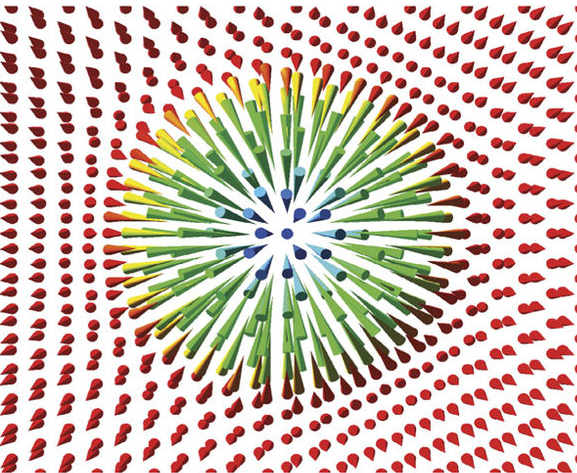 Spintronics, a combination of spin and electronics, not uses only the electrical charge, but also the intrinsic spin of the electron to process information. Recently, non-collinear chiral magnetic structures called skyrmions have received a lot of interest in the field of spintronics. Magnetic skyrmions are particle-like, highly stable vortical objects, in which the magnetization of the atoms rotates from a ferromagnetic background into the opposite direction in the center of the core.
For an application of skyrmions in data storage devices the knowledge of the temperature and magnetic field dependence is crucial. Especially the description of phase transitions is of prime importance. I use an advanced Monte Carlo technique called parallel tempering Monte Carlo (PTMC) to investigate these properties of skyrmion systems.
Skyrmions can be found in so-called frustrated spin systems where different competing interactions occur. This leads to many metastable states in the energy landscape, hence the description of the system needs a highly sophisticated modeling.
The PTMC uses thermal energy to overcome energy barriers between metastable states to sample a large volume of the phase space. Therefore, a certain number of copies of one spin structures, the so called replicas, were created and simulated at different temperatures. During the simulation time, replicas of adjacent temperatures are getting swapped. In doing so, the replicas were heated up and cooled down during the simulation process. This technique allows an accurate thermodynamical study of different magnetic systems which can host magnetic skyrmions.
Research Interest
- Theoretical and computational physics, thermodynamics
- Spintronics, nanomagnetism, spin glass
- Skyrmions and chiral magnetic structures
- Monte Carlo simulations
Publications
- B. Dupé, G. Bihlmayer, M. Böttcher, S. Blügel and S. Heinze, Engineering skyrmions in transition-metal multilayers for spintronics, Nature Communications, 7, p. 11779, 2016.
- M. Böttcher, S. Heinze, S. Egorov and J. Sinova and B. Dupé, B–T phase diagram of Pd/Fe/Ir(111) computed with parallel tempering Monte Carlo, New Journal of Physics, 20, 2018.
- M. Hervé, B. Dupé, R. Lopes, M. Böttcher, M. Martins, T. Balashov, L. Gerhard, J. Sinova and W. Wulfhekel , Stabilizing spin spirals and isolated skyrmions at low magnetic field exploiting vanishing magnetic anisotropy, Nature Communications, 9, 2018.
- I. Lemesh, K. Litzius, M. Böttcher, P. Bassirian, N. Kerber, D. Heinze, J. Zázvorka, F. Büttner, L. Caretta, M. Mann, M. Weigand, S. Finizio, J. Raabe, M. Im, H. Stoll, G. Schütz, B. Dupé, M. Kläui and G. Beach, Current‐Induced Skyrmion Generation through Morphological Thermal Transitions in Chiral Ferromagnetic Heterostructures, Advanced materials, 30, 2018.
- B. Zimmermann, G. Bihlmayer, M Böttcher, M. Bouhassoune, S. Lounis, J. Sinova, S. Heinze, S. Blügel and B. Dupé, Comparison of first-principles methods to extract magnetic parameters in ultrathin films: Co/Pt(111), Physical Review B, 99, 2019.
Team Members (without pictures)
| Name | Working Area | Office /Building 2412 | Phone +49 6131 39- | Email |
|---|---|---|---|---|
University Professor | ||||
| Jairo SINOVA | Alexander von Humboldt Professor, Head of INSPIRE, Director of SPICE | 01-327 | 23340 | sinova@uni-mainz.de |
Research Team Leaders | ||||
| Bertrand DUPÉ | Computational Materials Design | (2413) 02-231 | 25781 | bertdupe@uni-mainz.de |
| Olena GOMONAY | Antiferromagnetic Spintronics | 01-319 | 23643 | ogomonay@uni-mainz.de |
| Erik R. McNELLIS | Organic Spintronics | 01-321 | 23644 | emcnelli@uni-mainz.de |
Administration | ||||
| Elena HILP | SPICE and Guests Coordinator | 01-325 | 27992 | ehilp@uni-mainz.de |
| Denise KORNBRUST | HR Management and Project Management | 01-323 | 27991 | dkornbr@uni-mainz.de |
| Juliane SCHMIDT | - on maternity leave - | |||
| Robert-André VETTEL | IT & Systems Administration | (2413) 02-233 | 27927 | ra.vettel@uni-mainz.de |
Visiting Scientists | ||||
| Sergei A. EGOROV | University of Virginia, USA | |||
| Rafael GONZÁLEZ HERNÁNDEZ | Alexander v. Humboldt Fellow Universidad del Norte, Colombia | 01-319 | 23643 | rhernand@uni-mainz.de |
| Warlley H. CAMPOS | PhD Candidate joint with TWIST Group Skyrmions and Spintronics in Topological Insulators | 2412 / 01-523 | wacampos@uni-mainz.de | |
| Hamidreza KAZEMI | Topological Spintronics Department of Physics and Research Center OPTIMAS, Technical University of Kaiserslautern | 2412 / 01-321 | hakazemi@uni-mainz.de | |
| Shradha Chandrashekhar Koli | Topological Material Design Research Group of Prof. Zhao, Albert Fert Institute of Beijing | Staudingerweg 9 / 02-231 | schandra@uni-mainz.de | |
Research Staff | ||||
| Reza MAHANI | Organic Spintronics | 01-321 | 23644 | rmahani@uni-mainz.de |
| Davi R. RODRIGUES | Postdoctoral Researcher joint with TWIST Group | 2412 / 01-533 | davrodri@uni-mainz.de | |
| Ricardo ZARZUELA | Organic Spintronics | 01-315 | 25781 | rzarzuela@uni-mainz.de |
PhD Candidates | ||||
| Pedram BASSIRIAN | Research Assistant joint with TWIST Group | 2412 / 01-523 | pbassiri@students.uni-mainz.de | |
| Marie BÖTTCHER | Computational Materials Design | 01-523 | 27424 | m.boettcher@uni-mainz.de |
| Uday CHOPRA | Organic Spintronics | 01-523 | 27424 | uchopra@uni-mainz.de |
| Diana PRYCHYNENKO | Emmy-Noether Group TWIST | 01-523 | 27424 | prychynenko@uni-mainz.de |
| Libor ŠMEJKAL | Antiferromagnetic Spintronics | 01-315 | 25781 | lsmejkal@uni-mainz.de |
Master Students | ||||
| Wojciech MORAWIEC | Computational Materials Design | (2413) 02-233 | 24549 | |
Student Assistants | ||||
| Hjördis PUSCH | Media & Photography | 01-323 | 27991 | hjopusch@uni-mainz.de |
Postal Address
Johannes Gutenberg Universität Mainz
Institute of Physics
INSPIRE Group
Staudingerweg 7
D 55128 Mainz
Group's Office
Room: 2412 / 01-323
Phone: +49 6131 39 - 21268
Fax: +49 6131 39 - 26375
Email: sinova-group@uni-mainz.de
Directions
Find us on Google Maps
Go to Travel Instructions
View Campus Map
View Floor Plan
Dr. Bertrand Dupé
Expertise
- Solid state physics and materials science
- Atomistic simulations, density functional theory (DFT)
- Spin dynamics
- Monte Carlo simulations of frustrated magnets
Publications (Highlights)
- B. Dupé, G. Bilhmayer, M. Böttcher, S. Blügel, and S. Heinze "Engineering skyrmions in transition-metal multilayers for spintronics" Nature Communications, 2016, 7, 11779.
- B. Dupé, M. Hoffmann, C. Paillard, and S. Heinze "Tailoring magnetic skyrmions in ultra-thin transitions metal films" Nature Communications, 2014, 5, 4030.
- B. Dupé, I. C. Infante, G. Geneste, P.-E. Janolin, M. Bibes, A. Barthélémy, S. Lisenkov, L. Bellaiche, S. Ravy, B. Dkhil "Competing phases in BiFeO3 thin films under compressive epitaxial strain" Physical Review B, 2010, 81, 144128.
- I. C. Infante, S. Lisenkov, B. Dupé, M. Bibes, S. Fusil, E. Jacquet, G. Geneste, S. Petit, A. Courtial, J. Juraszek, L. Bellaiche, A. Barthélémy, and B. Dkhil "Bridging multiferroic phase transitions by epitaxial strain in BiFeO3" Physical Review Letters, 2010, 105, 057601.
- H. Béa, B. Dupé, S. Fusil, R. Mattana, E. Jacquet, B. Warot-Fonrose, F. Wilhelm, A. Rogalev, S. Petit, V. Cros, A. Anane, F. Petroff, K. Bouzehouane, G. Geneste, B. Dkhil, S. Lisenkov, I. Ponomareva, L. Bellaiche, M. Bibes, A. Barthélémy "Evidence for room-temperature multiferroicity in a compound with a giant axial ratio" Physical Review Letters, 2009, 21, 217603.
Team Members
University Professor
Jairo SINOVA
 Alexander von Humboldt Professor,
Head of INSPIRE, Director of SPICE
Phone: +49 6131 39 - 23340
Fax: +49 6131 39 - 26375
Office: Staudingerweg 7 / 01-327
sinova@uni-mainz.de
Sinova's Complete CV and Short CV
Leerzeile
Research Team Leaders and Postdoctoral Fellows
Atasi CHAKRABORTY
 Alexander von Humboldt Postdoctoral Fellow
Antiferromagnetic and Altermagnetic Spintronics
Phone: +49 6131 39 - 27992
Office: Staudingerweg 7 / 01-325
Olena GOMONAY

Independent Research Senior Team Leader
Spin+X and ElastoQMat PI
Antiferromagnetic Spintronics
Phone: +49 6131 39 - 23643
Office: Staudingerweg 7 / 01-319
Pieter GUNNINK
 Independent Research Team Leader and Marie Skłodowska-Curie Actions (MSCA) Postdoctoral Fellow
Phone: +49 6131 39 - 27991
Office: Staudingerweg 7 / 01-315
Xanthe VERBEEK
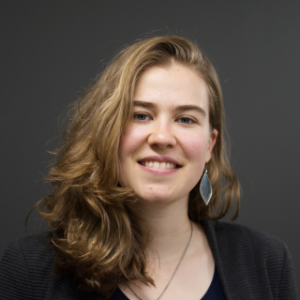 Postdoctoral Fellow ElastoQMat and SPIN+X: Altermagnetic and Antiferromagnetic Spintronics
Phone: +49 6131 39 - 27992
Office: Staudingerweg 7 / 01-325
xverbeek@uni-mainz.de
Leerzeile
Administration
Elena HILP

Administration
PA of Sinova, SPICE & Guests Coordinator
Phone: +49 6131 39 - 27992
Fax: +49 6131 39 - 23474
Office: Staudingerweg 7 / 01-325
Denise KORNBRUST
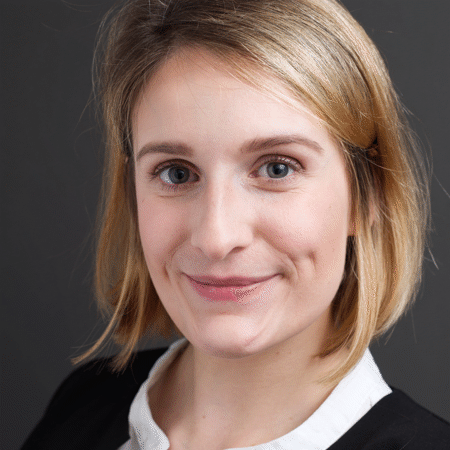
Administration
HR & Project Management
Phone: +49 6131 39 - 27991
Phone (direct): +49 6131 39 - 23642
Fax: +49 6131 39 - 26375
Office: Staudingerweg 7 / 01-323
Hjördis PUSCH

Administration
HR, Project Management
Phone: +49 6131 39 - 27991
Fax: +49 6131 39 - 26375
Office: Staudingerweg 7 / 01-323
Leerzeile
PhD Candidates
Gaspar DE LA BARRERA
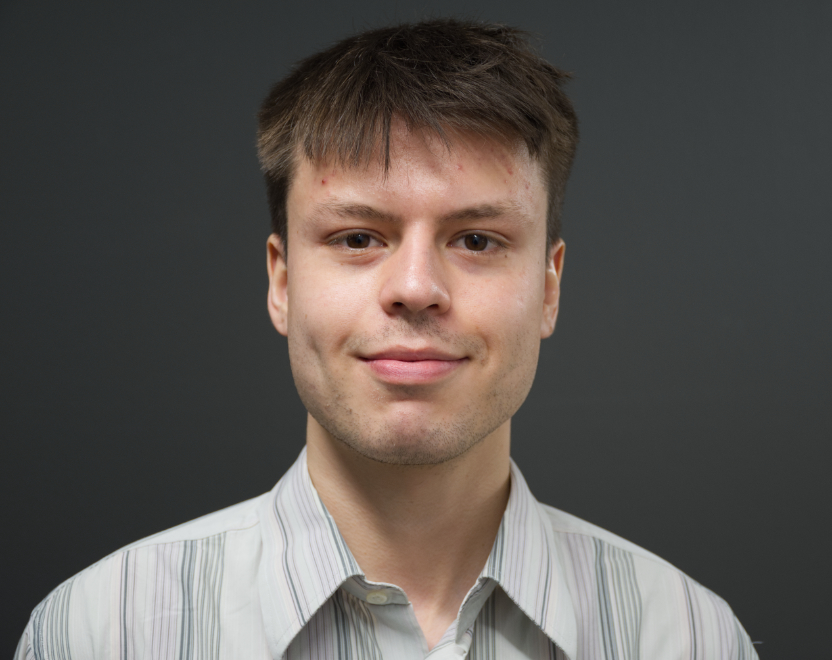
PhD Candidate
Antiferromagnetic spintronics and unconventional magnetism
Phone: +49 6131 39 - 27991
Fax: +49 6131 39 - 26375
Office: Staudingerweg 7 / 01-533
Rodrigo JAESCHKE

PhD Candidate
Topological Antiferromagnetic Spintronics
Phone: +49 6131 39 - 27424
Fax: +49 6131 39 - 26375
Office: Staudingerweg 7 / 01-317
Sergio RODRÍGUEZ
 PhD Candidate
Unconventional Magnetism and Spintronics
Phone: +49 6131 39 - 27424
Fax: +49 6131 39 - 26375
Office: Staudingerweg 7 / 01-533
Master Students
Nils KELLER

Phone: +49 6131 39 - 27424
Fax: +49 6131 39 - 26375
Office: Staudingerweg 7 / 01-523
Colin LANGE

Phone: +49 6131 39 - 27424
Fax: +49 6131 39 - 26375
Office: Staudingerweg 7 / 01-523
Visiting Scientists
Rafael GONZÁLEZ HERNÁNDEZ
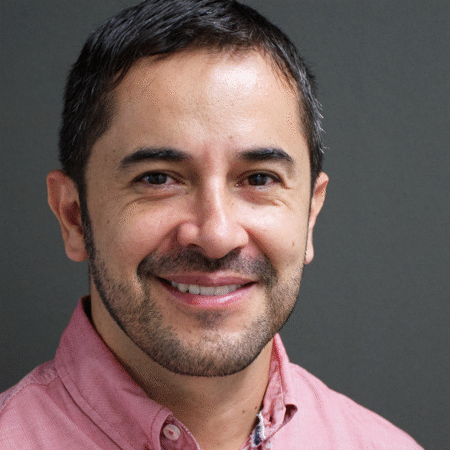
Associate Professor
Alexander v. Humboldt Fellow
Universidad del Norte
Departamento de Fisica
Barranquilla, Colombia
Jacob GAYLES
Leerzeile
Scientific Student Assistants
Thabiso KHOZA

Media & Outreach Student Assistant
Phone: +49 6131 39 - 27991
Fax: +49 6131 39 - 26375
Office: Staudingerweg 7 / 01-322
Elizabeth PANFILOVA

Administration
HR & Administrative Student Assistant
Phone: +49 6131 39 - 27991
Fax: +49 6131 39 - 26375
Office: Staudingerweg 7 / 01-323
Photos: Sabrina Hopp, Robert Vettel, Lukas Klein and Angélica Ruiz
Dr.-Ing. Melanie Dupé
Research Interests
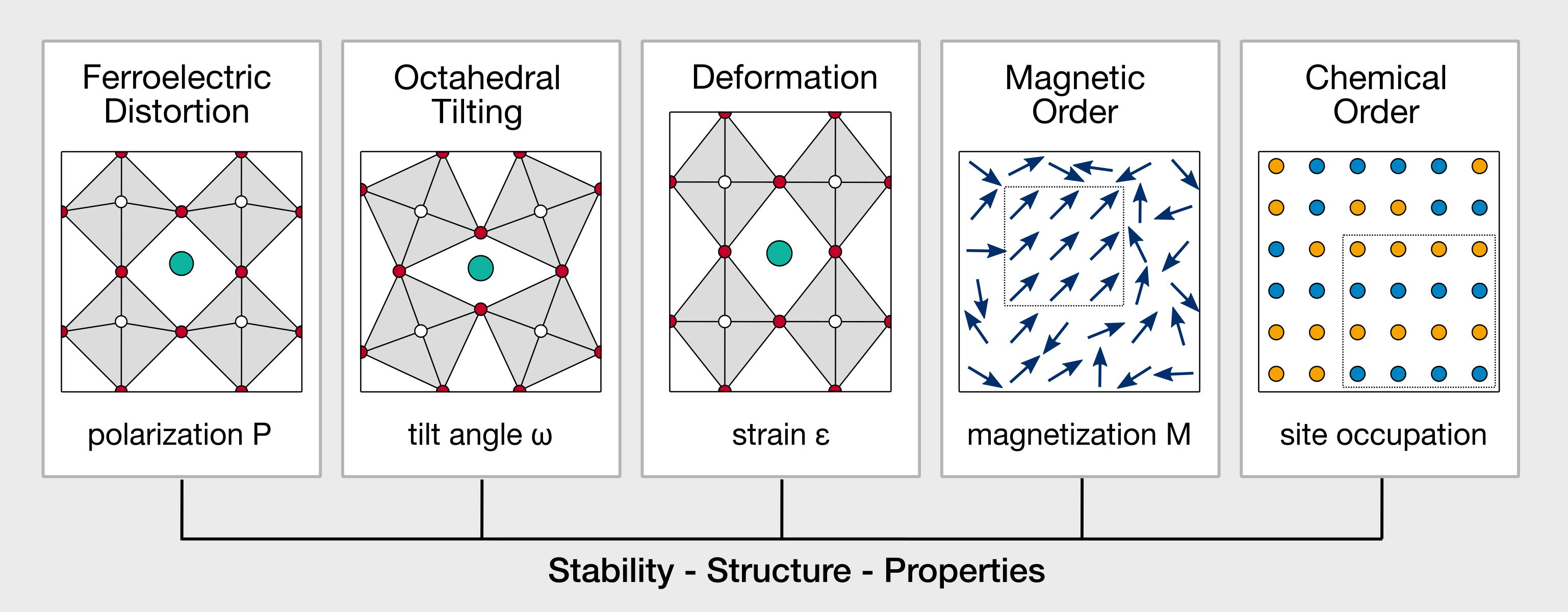
Atomistic simulations of multiferroics
Expertise
- Chemistry and materials science
- Atomistic simulations, density functional theory (DFT) and Monte-Carlo
- Functional materials (lead-free piezoelectrics, cathode materials for lithium ion batteries, phosphors)
- Structure-property relationships in perovskites
- Thermodynamic stability and point defects in dielectrics
Publications (Highlights)
- P. B. Groszewicz, M. Gröting, H. Breitzke, W. Jo, K. Albe, G. Buntkowsky, J. Rödel, Reconciling Local Structure Disorder and the Relaxor State in (Bi1/2Na1/2)TiO3- BaTiO3, Scientific Reports, 2016, 6, 31739.
- R. Hausbrand, G. Cherkashinin, H. Ehrenberg, M. Gröting, K. Albe, C. Hess, W. Jaegermann, Fundamental degradation mechanisms of layered oxide Li-ion battery cathode materials: Methodology, insights and novel approaches, Materials Science and Engineering: B, 2015, 192, 3-25.
- S. Li, J. Morasch, A.Klein, C. Chirila, L. Pintilie, L. Jia, K. Ellmer, M. Naderer, K. Reichmann, M. Gröting, K. Albe, Influence of orbital contributions to the valence band alignment of Bi2O3, Fe2O3, BiFeO3, and Na1/2Bi1/2TiO3, Physical Review B, 2013, 88, 045428.
- M. Gröting, I. Kornev, B. Dkhil, K. Albe, Pressure-induced phase transitions and structure of chemically ordered nanoregions in the lead-free relaxor ferroelectric Na1/2Bi1/2TiO3, Physical Review B, 2012, 86, 134118.
- M. Gröting, S. Hayn, K. Albe, Chemical order and local structure of the lead-free relaxor ferroelectric Na1/2Bi1/2TiO3, Journal of Solid State Chemistry, 2011, 184, 2041-2046.
04.11.2016 – INSPIRE Group Welcomes New Team Members
We are very pleased to welcome Bertrand Dupé and Melanie Dupé, Kyoung-Whan Kim, Marie Böttcher and Uday Chopra to the INSPIRE group. Bertrand Dupé joined us as an interim professor and team leader. Melanie Dupé and Kyoung-Whan Kim, both postdoctoral researcher, add perfectly our team as well as Marie Böttcher and Uday Chopra, who joined us as PhD students.
Dr. Erik R. McNellis
Welcome. 🙂
My work sits at the nexus of two major trends of contemporary materials- and nano-science:
The first is the exploitation of the lower cost, greater abundance, greater tailorability and versatility of components based on organic molecules over traditional solid state materials in microtechnology.
The second is the use of the laws of quantum mechanics and powerful computers to predict highly accurate, atomically resolved properties of nano-systems. Such computational modeling from first-principles theory is exponentially developing into an essential, extremely cost-efficient tool for academic and industrial nanotechnological research alike.
Previously, I have modeled solid surfaces functionalized with single-molecule electrooptical motors, and worked on chemically tuning the electronic motion in novel solar cells based on organic molecules and quantum-dots. My methodological experience covers electronic structure theory in various forms from the solid state to quantum chemical methods.
Currently, I lead the Organic Spintronics Team. We work on developing molecular materials and components for spintronics from atomistic theoretical models, using the full gamut of modern first-principles and multi-scale modeling methods.
Publications (Highlights)
- "Polaron spin dynamics in high-mobility polymeric semiconductors", Nature Physics (2019)
- "Long spin diffusion lengths in doped conjugated polymers due to enhanced exchange coupling", Nature Electronics 2, 98 (2019)
- "Tuning the effective spin-orbit coupling in molecular semiconductors.", Nature Communications, 8, 15200 (2017)
- "Structure and energetics of azobenzene on Ag(111): benchmarking semiempirical dispersion correction approaches.", Physical Review Letters, 104, 36102 (2010)
- "Azobenzene at coinage metal surfaces: Role of dispersive van der Waals interactions.", Physical Review B, 80, 205410–14 (2009)
Awards & Fellowships
- Postdoctoral Fellowship at FOM AMOLF (Amsterdam, NL) / Max-Planck Institute for Polymer Research (Mainz, DE) (Feb 2012 – Oct 2014)
- Full Scholarship at International Max-Planck Research School (Berlin, DE) (Jan 2006 – May 2008)
- Full Scholarship at Institute for Pure and Applied Mathematics, UCLA (Los Angeles, USA) (Sep 2005 – Nov 2005)
01.08.2016 – Ulrike Ritzmann joined the INSPIRE Group

We are very pleased to welcome Ulrike Ritzmann to the INSPIRE group. Before Ulrike joined our group, she had a Postdoc position in Prof. Ulrich Nowak's group at the University of Konstanz. Her research interest lies in the field of spin caloritronics, that combines the interplay of heat, charge and spin. In magnetic materials, temperature gradients can excite spin currents mediated via the so-called magnons, which are the excitations of the magnetic system. By using atomistic spin model simulations, she studies the thermally driven magnon propagation and its characteristic length scale in different magnetic materials starting from ferromagnets to two-sublattice materials like antiferromagnets and ferrimagnets.