Research

19.12.2017 – Olena Gomonay receives DFG grant

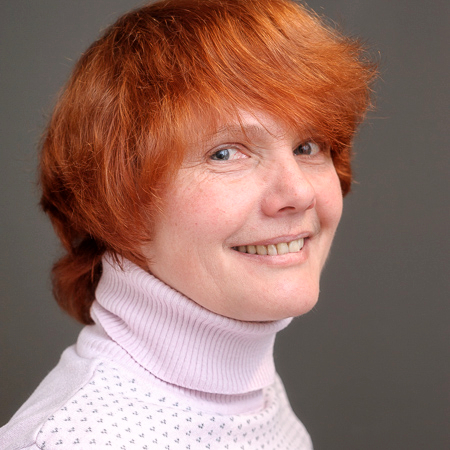
We congratulate Olena (Helen) Gomonay on obtaining her first DFG research grant “SHARP: Spintronics witHAntiferRomagntes and Phonos”. Well done Helen!

The proposed research project will open and explore new ways to detect and manipulate antiferromagnets using phonons and magneto-elastic coupling effects.

Funding

NameFunding DetailsDurationPrincipal Investigator
"Alexander von Humboldt Professorship"Alexander von Humboldt Foundation (AvH)01/2014-12/2018Prof. Dr. Jairo Sinova
"Theory of thermally driven spin-transport in spin-orbit coupled systems"Priority Program "Spin Caloric Transport", SPP 1538 (DFG)07/2014-06/2017Prof. Dr. Jairo Sinova
"Spin-charge conversion and spin caloritronics at hybrid organic-inorganic interfaces"ERC Synergy Grant SC2 No. 610115 (ERC)08/2014-07/2020Prof. Dr. Jairo Sinova
"Multiscale approach to study the creation, pinning, and interaction of skyrmions at transition-metal interfaces"Research Grant DU1489/2-1 (DFG) 2015-2016
Dr. Bertrand Dupé
"Spin+Orbitronics: Electrically generated spin orbit torques and pure-spin currents" Collaborative Research Centre "SPIN+X", SFB/TRR 173, Project A03 (DFG)2016-2020Prof. Dr. Jairo Sinova
"Humboldt Research Fellowship" Alexander von Humboldt Foundation (AvH)2016-2017Dr. Amaury de Melo Souza
"ASPIN: Antiferromagnetic Spintronics" FET Open (European Commission)2017-2021Prof. Dr. Jairo Sinova


Posted on

Computational Materials Design

Research interests

The Computational Material Design group is combining the properties of materials to enhance or create new physical phenomena. The versatility of multiferroics, that combine ferroelectricity, magnetism and deformation, is an ideal playground. In this family of material, those combining ferroelectricity and magnetism, so-called magneto-electrics, are of particular interest for technological application.
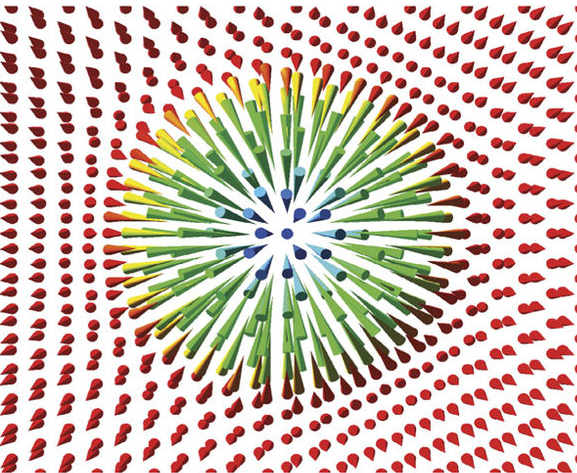
Our strength is based on the ability to study both the equilibrium and out-of-equilibrium properties of multiferroics. We focus on the non-collinear states of matter, such as magnetic skyrmions and spin spirals or magneto-electric domain walls, in which both equilibrium and non-equilibrium properties are intimately connected.

Methods

Our approach is based on density functional theory (DFT) to understand the fundamental properties of materials such as ferroelectric polarization, magnetic couplings, transport properties and their interplay. Due to its high computational cost, DFT is limited to the study of several tens of atoms at 0 Kelvin. In order to reach the experimental temperatures and length scales, we map our DFT results onto Hamiltonians which are then solved via Monte-Carlo or spin dynamics simulations.

Therefore, the Computational Materials Design subgroup is composed of experts from several fields who can cover a broad range of materials, length and temperature scales. We use several DFT packages such as the FLEUR  (FLAPW basis) and VASP (PAW basis) ab initio packages.

Collaborations

We benefit from the expertise of colleagues via close collaborations:


Posted on

20.11.2015 – New Collaborative Research Center on Spin Phenomena approved by DFG

At the meeting of the DFG senate, the new collaborative research centre (Sonderforschungsbereich - SFB) on spin phenomena (Spin+X) was approved. The Sinova Group takes part in this large scale project which unites the 30 leading groups in spintronics and spin - related research from Physics, Chemistry and Engineering at Johannes Gutenberg University Mainz and the TU Kaiserslautern. The project is initially funded with 12 Mio. Euros for 4 years and can be extended up to 12 years.

For more information read the JGU press release.

Posted on | Posted in Research

27.05.2014 – Sinova becomes a Gutenberg Research Fellow

GFK_gutenberg_research_award_2014_gruppenbild_klein

Johannes Gutenberg University Mainz established the Gutenberg Research College in 2007 to highlight the university's academic strengths and to promote promising new research fields. Its main instrument is the granting of fellowships to excellent researchers from all disciplines. This year, the GRC welcomed four new fellows, with Jairo Sinova among them.

Posted on | Posted in Research

News

Posted on